
Pat Oliphant: An Appreciation
Remembering a Giant

To be a young cartoonist in the ‘60’s and ‘70’s it would have been impossible to understand the form and purpose of the satiric cartoon without knowing the work of Pat Oliphant.
Oliphant provided the defining framework for the generation of post-WW II cartoonists (those earlier being, Herblock . . .
For the rest of the article become a paid subscriber.
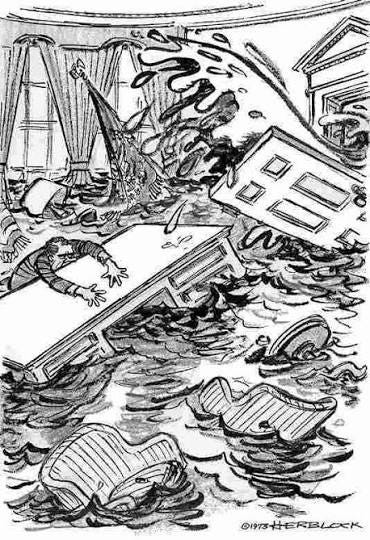
Bill Malden,
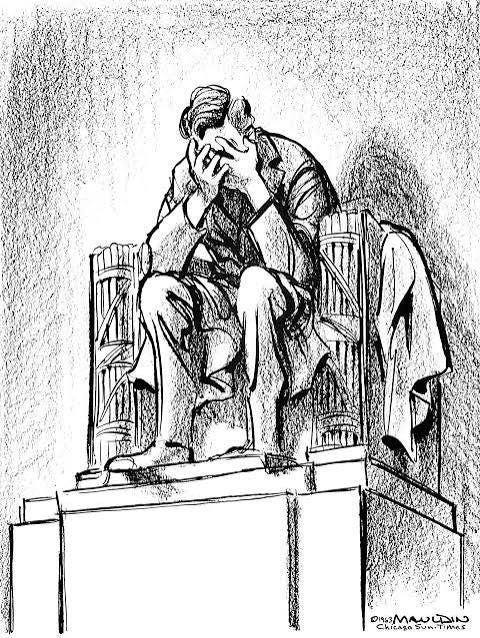
Paul Conrad,
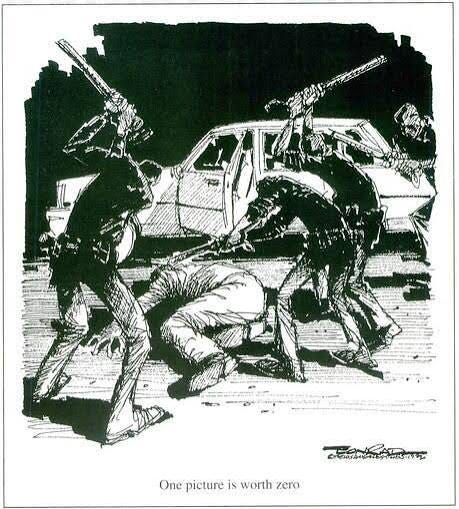
and others.) There were hundreds of newspapers and cartoonists at that time. The approach was always a vertical cartoon, roughly 4 X 6 in dimension, fitting on an editorial page, quite often in the upper right hand corner, with an editorial to the left and letters to the editor below. Those cartoons were extremely direct, quite often obvious, sometimes extremely powerful as in the cases of the names mentioned. The format, the approach and the sensibility enabled a single statement that was quite perfunctory. In many cases, there was no thought necessary in seeing them. They consisted of recognizable symbols, tropes, labels, and a caption. Meanwhile, in the UK and Europe, a different approach had taken root. These artists were stylistically freer, particularly in Great Britain. David Low is the great genius of 20th century political cartoon.
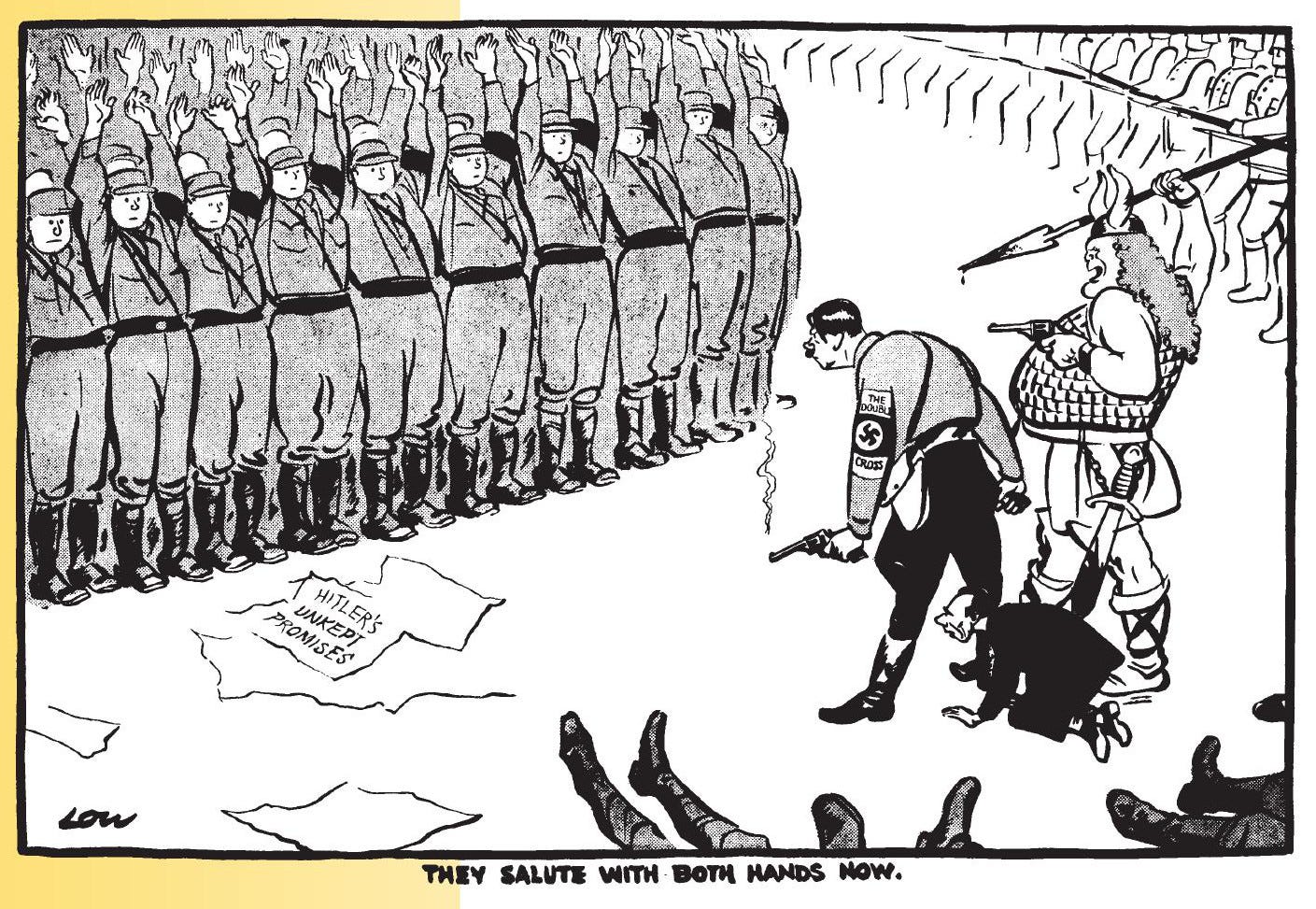
He did not draw vertically. He reveled in a simple brushstroke, solid black fields and killer caricature. Hitler was well aware of David Low and wanted him dead. David Low was also the bringer of this sensibility across the English speaking press and, eventually, through Patrick Oliphant, to the United States. By the time he had arrived in Denver the world had become more sophisticated. American readers had grown accustomed to
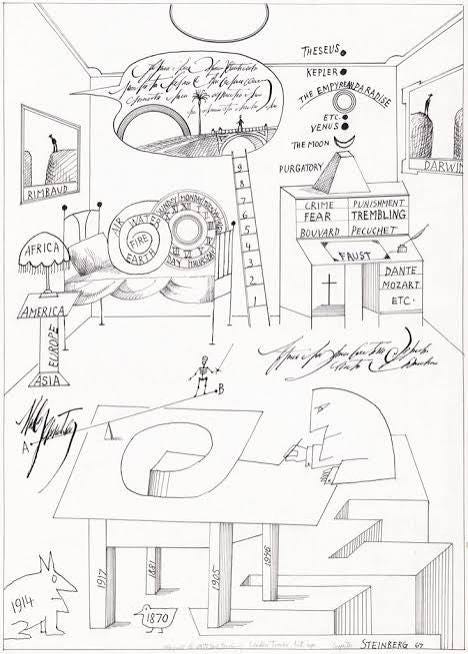
Saul Steinberg
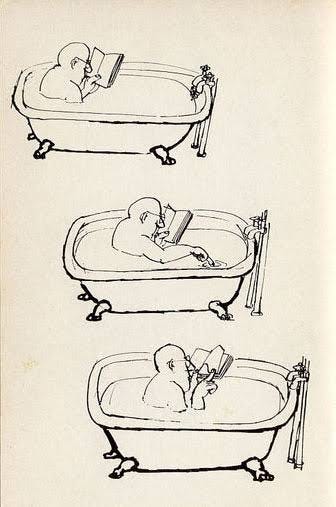
André François,
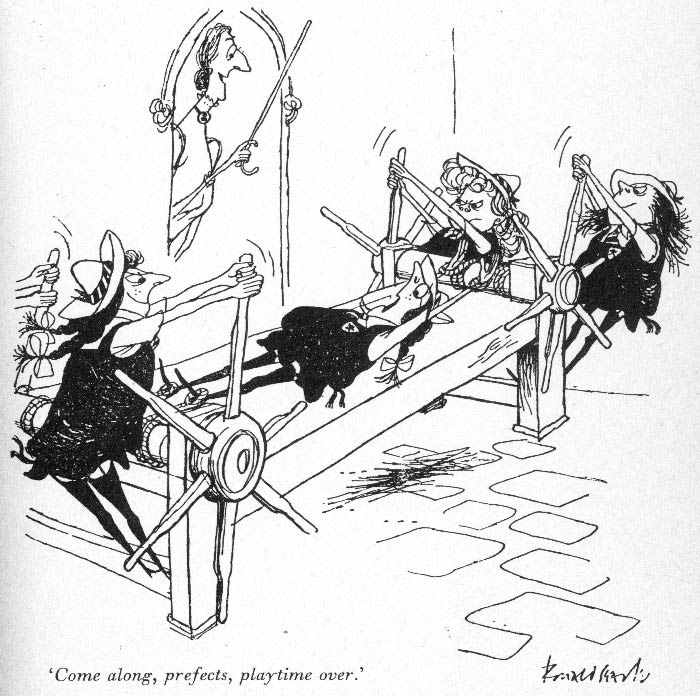
Ronald Searle and
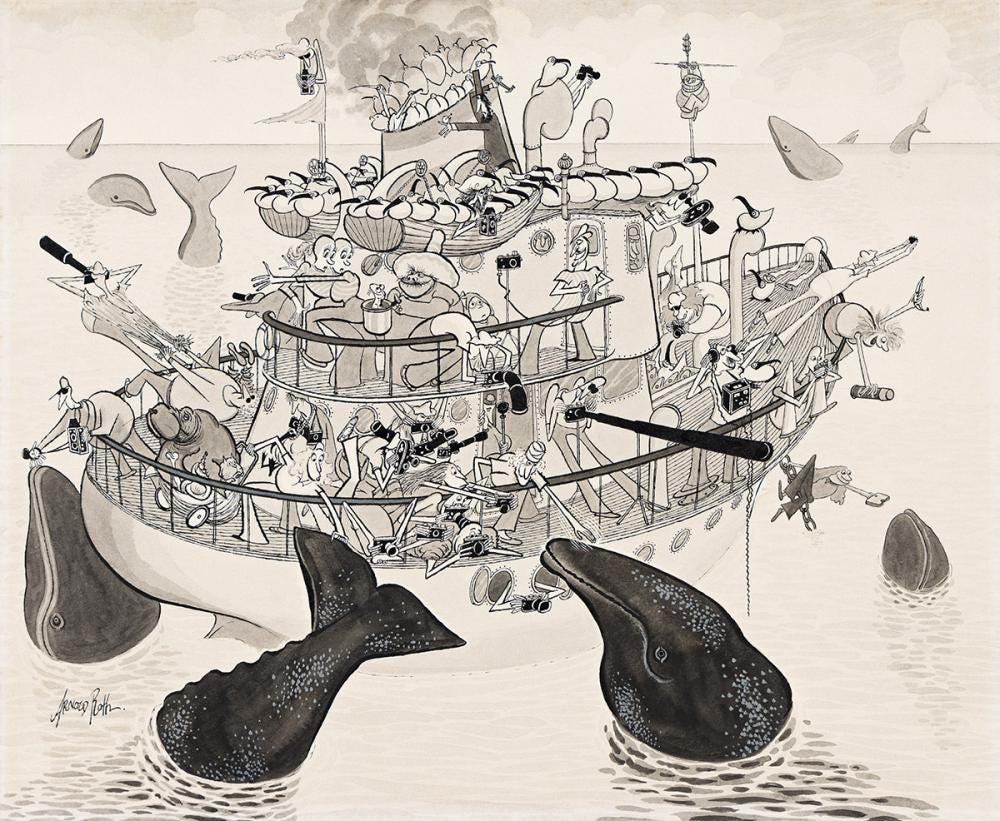
Arnold Roth. These were artists who valued graphic design, strong pen and ink work and a feeling of freedom. . With the American illustration movements on one shoulder and modern European tradition on the other, Oliphant came barreling through the world of political cartoon in daily newspapers and caused a revolution.
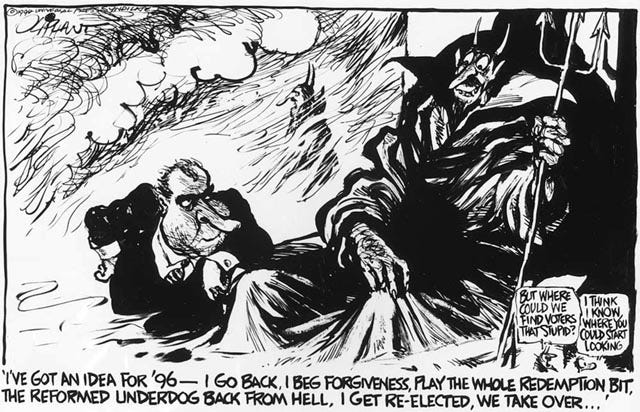
He knew how to use the area created in the new scope format. It gave the composition perspective, space, room to breathe.
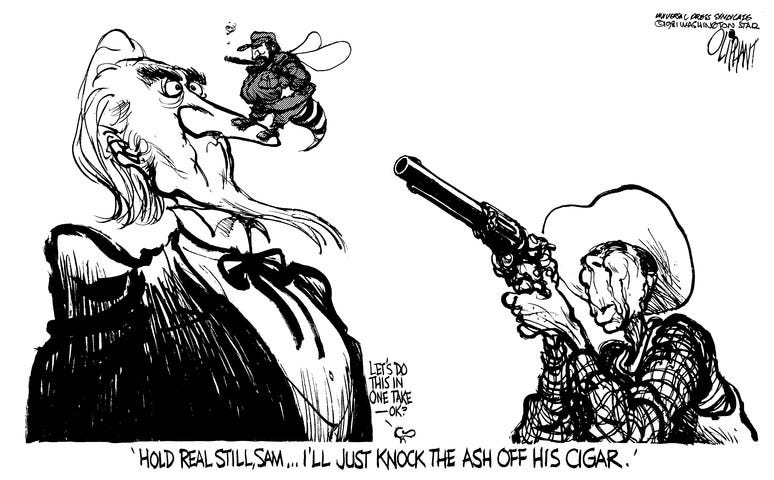
It gave you a sense of bending space.
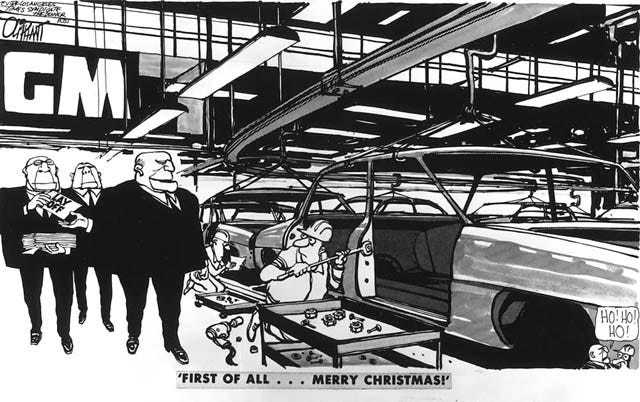
Look at how well he drew objects, and how he integrates the oligarchs here as integral parts of the factory floor.
Once artists and editors here got a load of his work there was no returning to what had been the default approach to the art. It was rather like the invention of Bebop where, once an artist had heard Charlie Parker and Dizzy Gillespie, they would be dying to try out those ideas and be that daring. As hard bop is still the defining ethos of live jazz today, the Oliphant revolution is still visible in many artists who came along since.
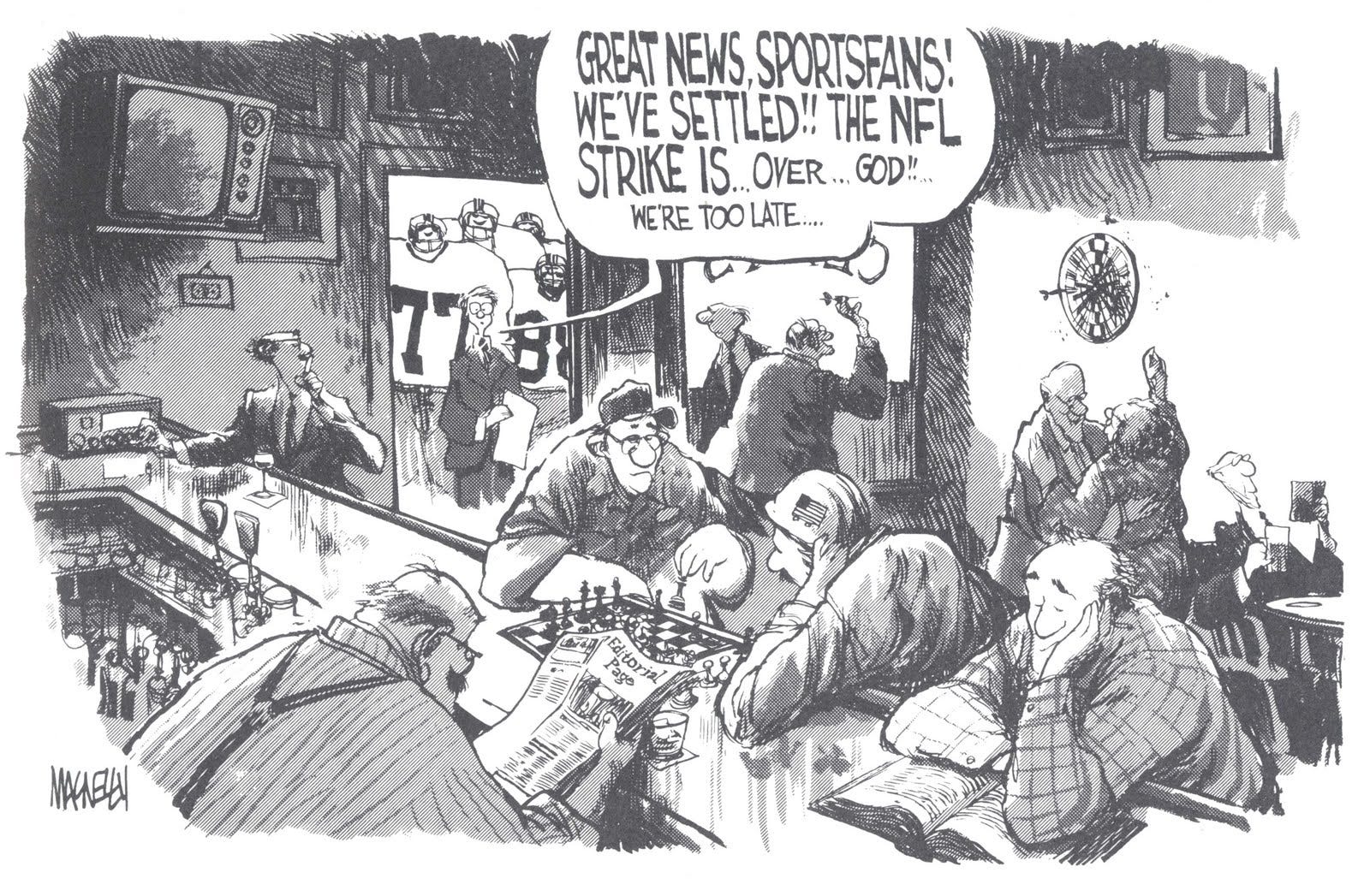
If you know the work of Jeff McNelly,
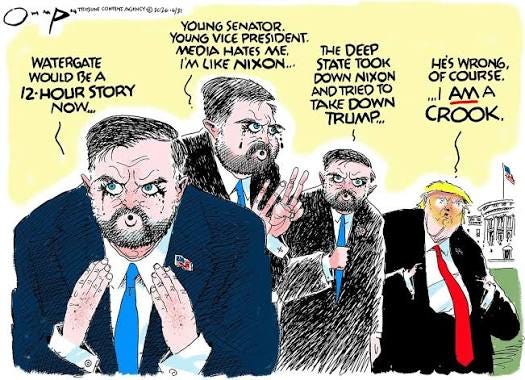
or Jack Ohman, you are seeing artists who entered into their own art universe, having passed through the Oliphant outer space boundary.
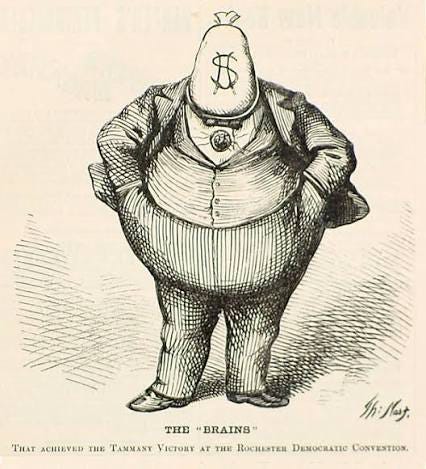
My work started out reaching back to an earlier time. I was admiring the great artists of the 19th century who used wood engraving to find graphic expression. If I had remained in political cartooning in the ‘70s, I possibly would have gone Oliphant’s way. His work was fast, dynamic, immediate and rich. As it happened, for me, I became an illustrator and was lifted by the influences of American and European illustration, having gone through many experiments until finally arriving at my own approach. It only later became my daily routine to do political drawings about current news, rather than illustrations done with longer deadlines. My work is the still a matter of illustrating ideas rather than constructing them in traditional ways of the daily cartoonist, but I still hear the call of Oliphant, urging us to always push it a little further, state it clearer, be always unafraid and absolutely, every day, piss off the right people.
I got to meet Pat, finally, in 2023 (seen here with Edward Sorel, finding myself between the greatest living cartoonist and greatest living caricaturist.)
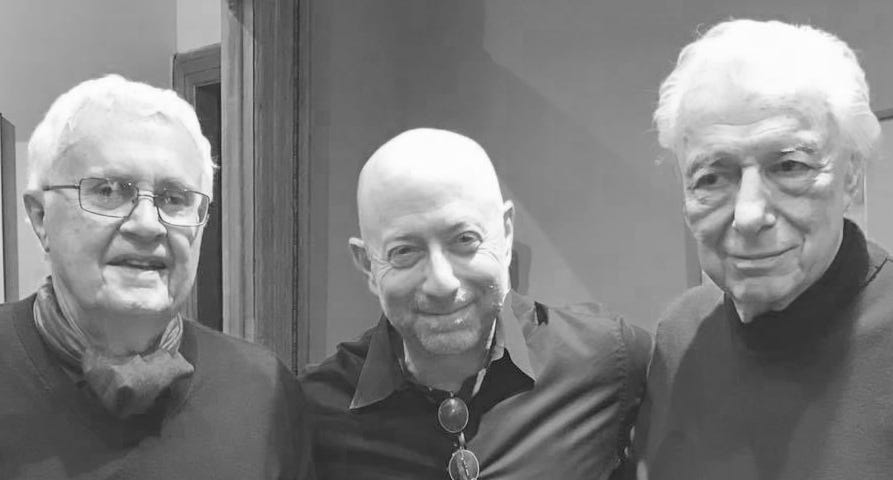
The conversation was limited, as he was, by that time, impaired. He did not have much to say about himself. He asked questions. And generally seemed to be enjoying the evening. Most important, for me, was the opportunity to tell him how grateful I was for his great gifts. And what his work meant to me, for its graphic power and its fierce moral courage.
He lives on, of course. His work will continue to teach about craft, free speech and dedication to the highest calling in the graphic arts: telling the truth.
RIP Pat.
My condolences, Steve. You've lost a brother in arms. Thanks for your perspective on Mr. Oliphant's art and importance as a visual communicator. May he rest in peace.
Best thing I've read today.